
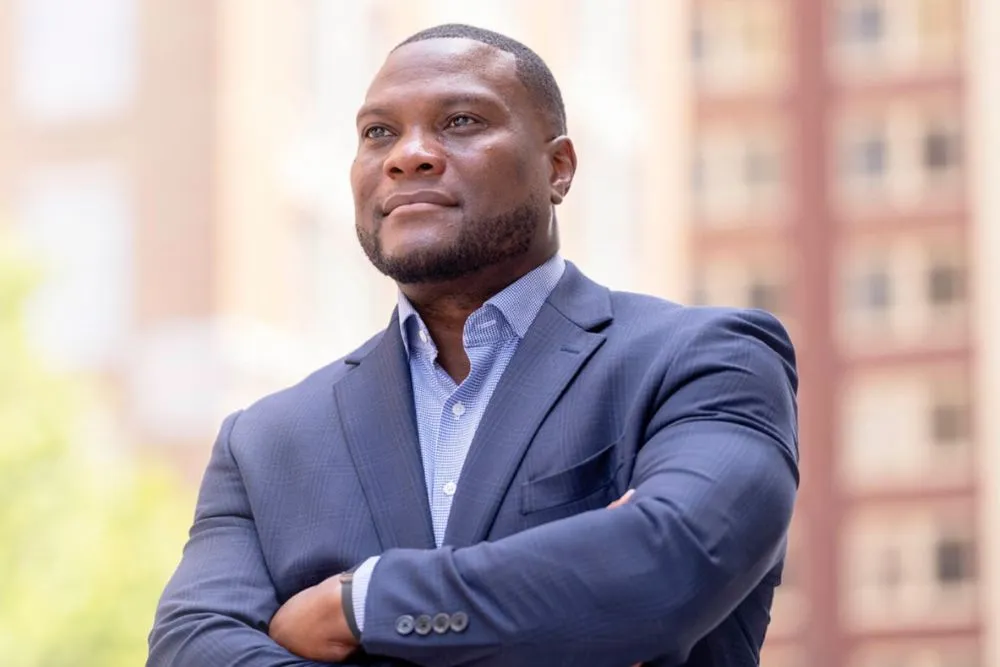
Greenwood Trust announced on Tulsa Race Massacre Observance Day
On Tulsa Race Massacre Observance Day, Mayor Monroe Nichols, the city’s first African American mayor, announced the launch of the Greenwood Trust, a $105 million private charitable fund aimed at addressing the lasting economic and social devastation caused by the 1921 Tulsa Race Massacre.
“Road to Repair” initiative and purpose
Standing at the Greenwood Cultural Center on Sunday, June 1, Nichols introduced the Trust as part of his “Road to Repair” initiative, designed to unify Tulsa and support the recovery of survivors, descendants, and the Historic Greenwood District, which was once known as Black Wall Street.
“This is a critical step to help unify Tulsans and heal the wounds that for so long prevented generations of our neighbors from being able to recover from the Race Massacre,” Nichols said. “The Greenwood Trust is really a bridge that connects what we as a community can bring to the table and what the community needs.”
What the Trust will focus on
The Greenwood Trust will serve as a vehicle to spur economic development and growth in North Tulsa, the Greenwood District, and surrounding neighborhoods. Nichols said the Trust will focus on three areas: housing and homeownership benefits for survivors and descendants of the Race Massacre, cultural preservation, and economic and educational advancement.
Funding breakdown and priorities
The plan calls for $24 million to support housing in Greenwood and North Tulsa. An additional $60 million will be allocated toward revitalizing buildings, addressing blight, and implementing components of the Kirkpatrick Heights Greenwood Master Plan. A $21 million Legacy Fund will support land acquisition, provide scholarships for descendants, and offer grants to local small businesses and organizations. The city council does need to approve any land transfer, but Nichols said the lawmakers aren’t likely to object.
National political climate and reparations headwinds
The mayor acknowledged that the national political climate—with President Donald Trump’s attacks on diversity, equity, and inclusion initiatives—makes any form of reparations difficult.
“The fact that this lines up with a broader national conversation is a tough environment,” Nichols said. “But it doesn’t change the work we have to do.”
First operational year and governance
Nichols said the first operational year of the Trust will serve as a planning year. Staff will be hired, fundraising will commence, and foundational programs will be established. The Trust will be managed by an executive director funded privately, along with a board of trustees and a board of advisors.
“As we seek to make this framework a reality, I am eager to work alongside my fellow Tulsans and partners across the country to create a fundamental shift in how we further establish generational wealth, housing opportunities, and repair for so many Tulsans,” said Nichols.
Social media reaction and public sentiment
Many people on social media have been weighing in on the mayor’s announcement with excitement and questions.
One social media user celebrated the news of the Trust emphasizing it was “over 104 years in the making.”
“This is not nearly enough to compensate for the billions lost when Greenwood was destroyed by racists jealous of prosperous Black people,” social media user Fly Sistah wrote on X, formerly known as Twitter.
‘Charting a New Path Forward Rooted in Unity and Truth‘
The Trust is expected to reach its $105 million asset goal by June 1, 2026, the 105th anniversary of the massacre. Assets may include transferred property, philanthropic contributions, and public funds if approved.
Nichols said that while Tulsa cannot undo the past, it can choose to invest in justice, opportunity, and dignity.
“At this moment in our nation’s history, this work will allow us to stand together and become a national model for how cities confront their history while charting a new path forward rooted in unity and truth,” he said. “One hundred four years after the Massacre, it is up to us to provide the framework that will build up a community that has been left out for far too long.”
Road to Repair actions since taking office
Since taking office in December, Nichols has built on years of advocacy and public demands for equity in Tulsa. His administration has committed to a series of actions under the Road to Repair framework.
He established Tulsa Race Massacre Observance Day on June 1 as an annual opportunity for reflection and community engagement.
Records release and ongoing investigations
More than 45,000 historical records related to the Massacre have also been made public, including a message from then-Mayor Evans to the City Commission, meeting minutes from the Board of Commissioners from 1908 to 1936, land records, and files on Interstate 244 and urban renewal.
Nichols asserted that the city remains committed to the 1921 Graves Investigation. His proposed fiscal year 2026 budget includes nearly $1 million for excavation at Oaklawn Cemetery based on expert archaeological recommendations. He said further details would be released in the coming weeks.
Community engagement and genealogy project
The Community Engagement Genealogy Project, funded in part by the Department of Justice Emmett Till Grant, continues with genealogy workshops, cold case training, and a new exhibit at the Greenwood Cultural Center.
“The massacre was hidden from history books, only to be followed by the intentional acts of redlining, a highway built to choke off economic vitality, and the perpetual underinvestment of local, state, and federal governments,” Nichols said. “Now it’s time to take the next big steps to restore.”
Source: The Washington Informer, https://www.washingtoninformer.com/1st-african-american-tulsa-mayor-announces-trust/